


Reading is one of the most important skills teachers assess, as it forms the foundation for learning across all subjects. Effective and efficient methods for evaluating students are more crucial than ever, particularly given the increasing emphasis on literacy. To accurately monitor and evaluate a student's reading ability, teachers must do more than simply determine whether a student can read words correctly. They must observe reading fluency, identify pronunciation and decoding errors, assess comprehension and vocabulary skills, and provide meaningful feedback. In addition, teachers often document observations and analyze assessment results to identify learning gaps and determine appropriate instructional interventions. As a result, reading assessments require significant time and attention (Davis, 2024).
During the researcher's data-gathering process, it was revealed that schools often conduct reading assessments manually, requiring teachers to evaluate students individually to ensure accuracy and reliability. However, manual assessment is inherently time-consuming because teachers must check, evaluate, and compare student performance, which becomes increasingly difficult to manage in large classrooms (Norova & Asrorov, 2021). While traditional assessment methods allow teachers to handle multiple learners within limited time, they still involve substantial effort in scoring and documentation, contributing to longer evaluation periods (Davis, 2024).
The assessment process becomes even more demanding when teachers conduct progress monitoring, record student performance, and interpret results to guide instructional decisions. Beyond simple scoring, teachers must analyze student strengths and weaknesses to ensure accurate evaluation of reading development (Norova & Asrorov, 2021). These responsibilities increase workload and limit the number of students that can be assessed within a given time frame (Davis, 2024).
Unlike automated systems, reading evaluations are typically conducted manually, requiring teachers to listen, observe, and document performance for each student. This repetitive process makes reading checks particularly time-intensive in classrooms with large class sizes. In addition, alternative or performance-based assessments require even more detailed judgment and structured criteria, further increasing the time needed for evaluation (Norova & Asrorov, 2021). As teachers balance multiple responsibilities such as lesson planning and classroom management, reading assessment becomes even more demanding, especially when supporting learners who require additional guidance (Extramarks, 2025).
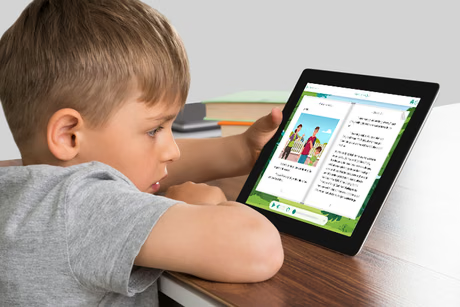
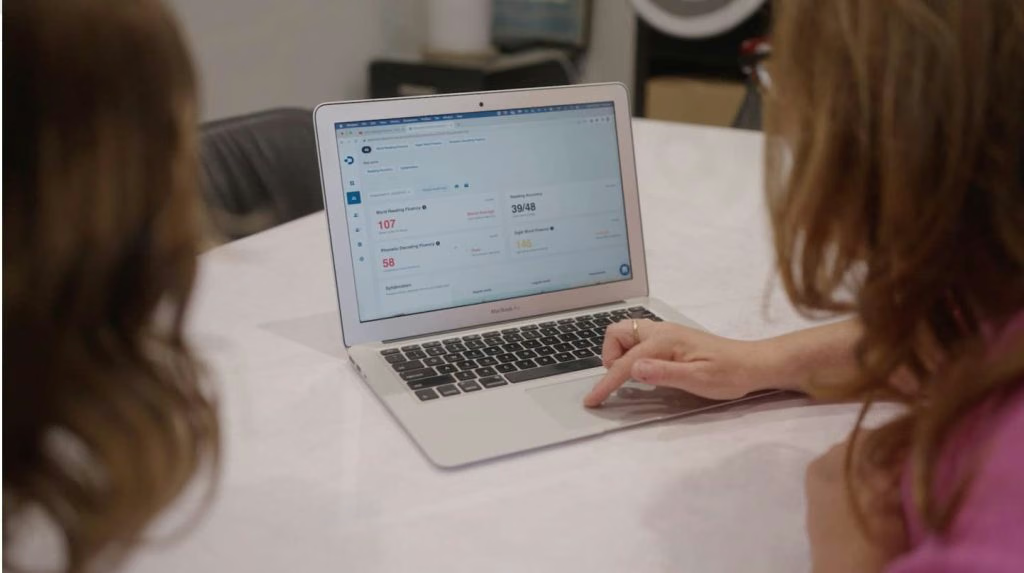
That is why, in PABASA, we aim to address the time-intensive nature of reading checks by supporting a more efficient and structured assessment process for teachers. Our solution allows teachers to evaluate up to 10 students more quickly without sacrificing accuracy, using tools that track fluency and decoding in real time. By automating data recording and providing instant insights, PABASA helps teachers identify learning gaps, monitor student progress, and plan interventions more effectively - saving valuable classroom time while maintaining high-quality assessments.
References
Davis, C. (2024, June 18). How to Conduct Effective Reading Assessments. Literacy Lightbulb.